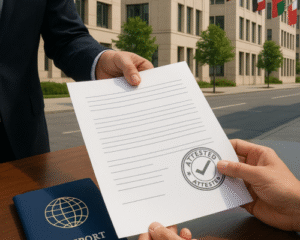
Indian-issued documents intended for use in Kuwait must undergo legalization and stamping by the Kuwait Embassy in India. Embassy attestation is mandatory for several purposes, including:

  • -Securing employment in Kuwait
  • -Pursuing higher education or school admission in Kuwait
  • -Applying for a family residence visa
  • -Establishing or expanding a business in Kuwait
  •  

Step-by-Step
Attestation Process in India 

Depending on the document category, attestation follows one of the recognized procedural routes:

  1. Education document / Educational document

Route A (HRD Route)

  1. -Human resourse depatment of respective state (HRD)
  2. -Ministry of external affairs new delhi (MEA)

-Kuwait embassy in new delhi

Route B (Home Department Route)

  1. -Notary
  2. -State Home Department in Maharashtra
  3. -Ministry of external affairs in new delhi (MEA)
  4. -Kuwait Embassy in new delhi

Non – Educational Document                                                                                          Route A (Maharashtra Home Department Route)

  1. -Notary
  2. -State Home department Maharashtra
  3. -Ministry of external affairs new delhi (MEA)
  4. -Kuwait Embassy in New Delhi

Route B (Respective State Home Department Route)

  1. -Home department of respective state
  2. -Ministry of External Affairs new delhi (MEA)
  3. -Kuwait Embassy in new delhi

Frequently Asked Questions (FAQ)

What Attestation Required for Kuwait?

Kuwait requires document attestation across educational, personal, and commercial records. Attestation is required for:

  • -Employment visas
  • -Family residence visas
  • -School and university admissions
  • -Setting up or registering a business in Kuwait

Any individual or business seeking to work, study, reside, or operate commercially in Kuwait requires attestation from the Kuwait Embassy in India. Legalization verifies document authenticity so local authorities and employers accept them without dispute.

Foreign authorities require verified documents to authenticate legal identity, qualifications, and civil status. Government bodies need these checks before issuing visas or commercial licenses, while employers rely on them to confirm credentials before finalizing hiring and sponsorship.